
I’m the Director of Higher Education Policy at EdTrust-West, leading a dedicated higher education team committed to advancing policies that support students of color experiencing poverty. As a proud Mexicana who grew up in poverty myself, I carry my lived experience into every part of my work. Over the past decade, I’ve worked to strengthen higher education policy, advocating for state funding and policy victories, so students of color have the resources, support, and opportunities they deserve to succeed. This year, we have an urgent opportunity to invest $100 million in college and career pathways and support AB 1871, a bill that will make it easier for high school students to take college courses.
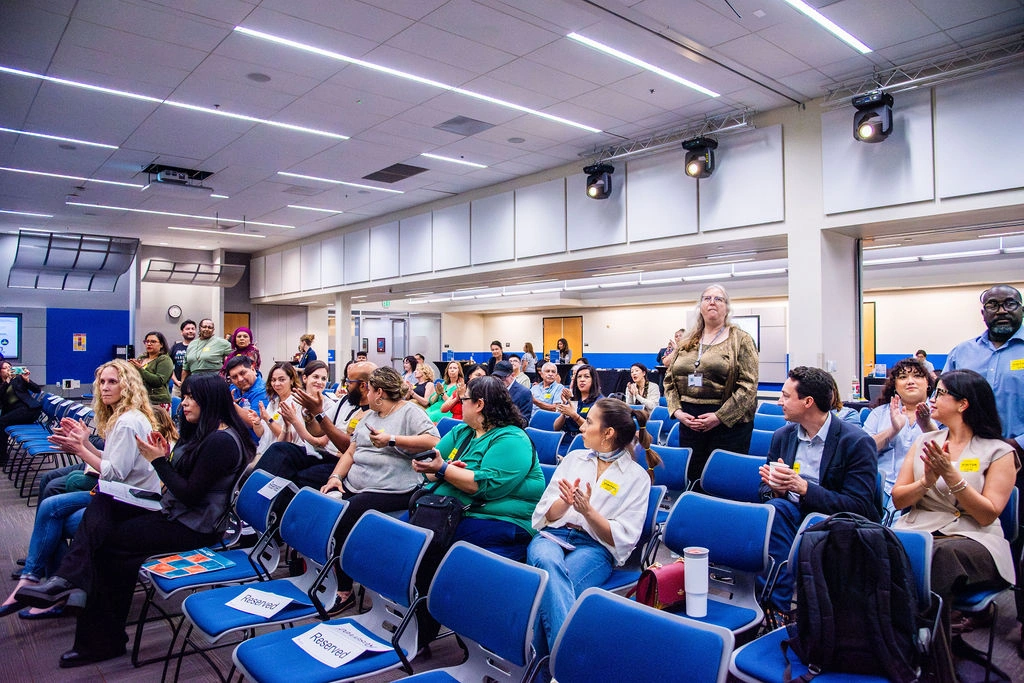
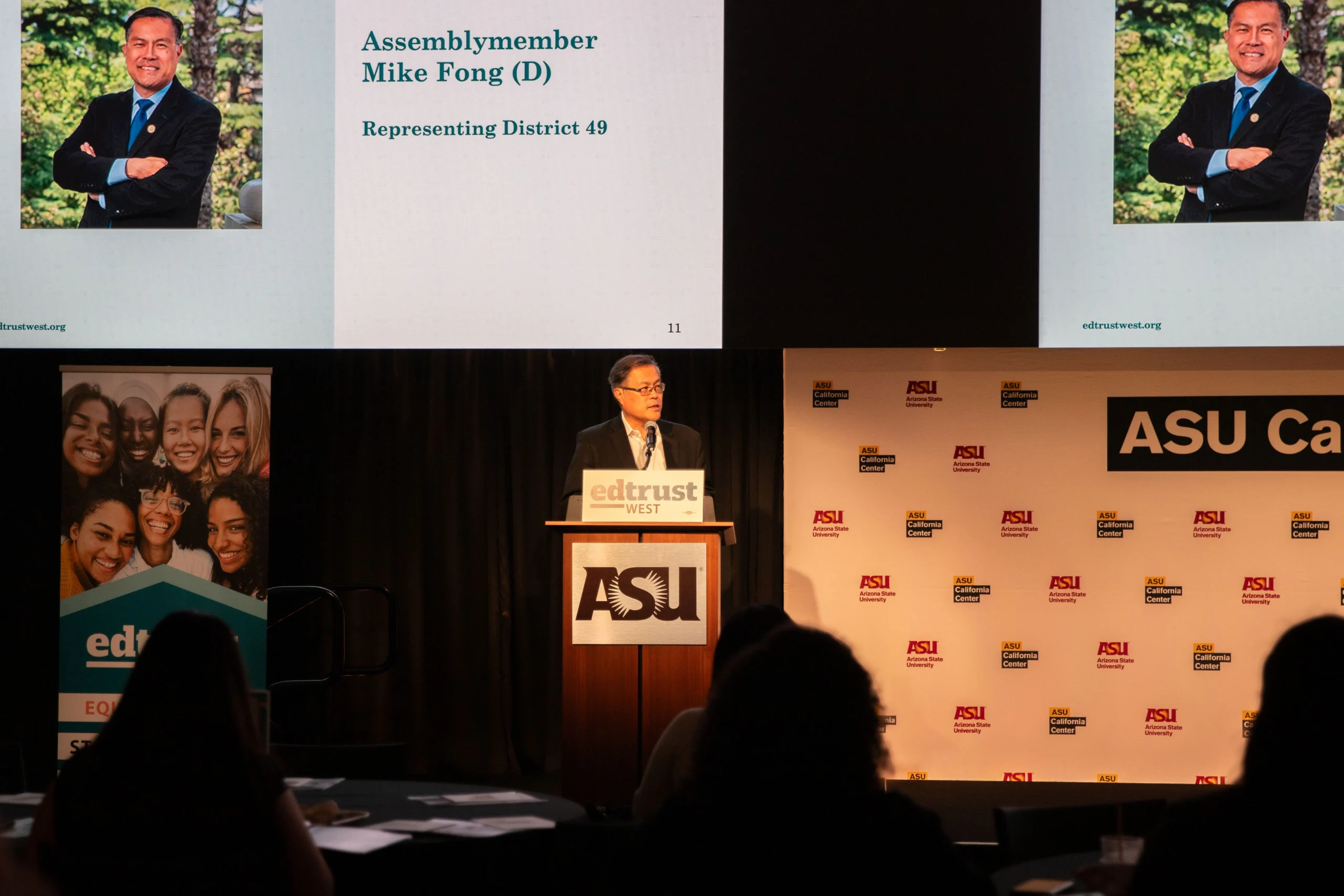
I’m especially energized by the momentum around dual enrollment, a proven pathway to and through college. The most recent Dual Enrollment Equity Conference, hosted by EdTrust-West in partnership with the California Alliance of Dual Enrollment Partnerships and the Career Ladders Project, drew over 1,000 educators, practitioners, leaders, and advocates. People come together because dual enrollment is a powerful, research-backed opportunity that allows high school students to take college courses and earn high school and college credit simultaneously. It saves students time and money, and the evidence is clear: dual enrollment increases college enrollment and completion of degree-applicable and transfer-level courses, while also improving grades and degree or certificate completion rates.
Part of the momentum we are seeing is thanks to California’s commitment to expanding college and career pathways:
- The California Community Colleges Vision 2030 calls for a strategy in which all CA high school students graduate with at least 12 college credit units through dual enrollment.
- The governor’s Multi-Year Roadmap for CA Community Colleges calls for a 15% increase in the number of students earning 12 college units through dual enrollment and closing equity gaps in access to these programs.
- Governor Newsom’s Master Plan for Career Education calls for universal availability and implementation of pathways programs.
- In 2022, the Legislature and the governor invested $700 million in one-time funds toward college pathways, including $500 million for Golden State Pathways and $200 million for Dual Enrollment.
- Now, more students than ever are participating in dual enrollment. Nearly 165,000 high schoolers are taking college courses. College and Career Access Pathways (CCAP) is driving this growth, accounting for almost half of all dual enrollment statewide.
However, research shows that dual enrollment opportunities in California are still not equitably available to all high school students, with notable disparities in access and participation for Black and Latinx students.
This year, we have the responsibility and opportunity to protect California’s commitments and sustain college and career pathways investments by focusing on two priorities:
First, support the $100 million one-time investment proposed in the 2026-27 state budget to expand access to college and career pathways, including dual enrollment, for high school students.
Why are additional investments needed when California allocated $700 million in one-time funding for college and career pathways four years ago? The reason is simple: sustainability. Those early investments allowed schools and colleges to plant the seeds of new dual enrollment programs – hire staff, build partnerships, and launch pathways that did not exist before. Today, those seeds have grown into fully operational dual-enrollment programs that help students earn both high school and college credit, strengthen students’ confidence, and open doors to higher education and career opportunities. But like any living system, these dual enrollment programs require continued care.
Without renewed investments, progress made over the last several years will wither. The state risks losing the momentum, infrastructure, partnerships, and trust that educators have been working hard to build. This year, we have a critical opportunity to make another strategic one-time investment that will bring college and career pathways one step closer to our state goals. To support sustainability, one-time dedicated funding is essential to ensuring that all students – especially those living in poverty – have access to high-quality pathways programs. The new one-time funding provides the opportunity to help school districts expand dual enrollment programs (e.g., build more comprehensive high quality dual enrollment pathways that prepare students for college success and career advancement); cover the start-up costs needed to launch dual enrollment programs (e.g., hiring more dual enrollment coordinators); increase access for justice-involved youth; and provide professional development so educators are fully prepared to teach dual enrollment courses.
Unfortunately, the Legislative Analyst’s Office (LAO) has recommended rejecting the proposal because districts can already access funding through the general block grant. However, in practice, general block grants tend to be absorbed into basic operating needs—particularly during periods of fiscal uncertainty—leaving far less room for districts to invest in innovation. If California is serious about expanding innovation and sustaining the success of dual enrollment, the state must invest dedicated one-time funding specifically for college and career pathways. Research, including EdTrust–West’s Jumpstart report, shows that high-quality dual enrollment pathways require additional resources to address persistent barriers such as disparities in dual enrollment access and participation, inconsistent granting of high school credit, lack of actionable data, insufficient coordination across systems, lack of inclusion of dual enrollment in ADA calculations, limited professional development, and instructor shortages. While current fiscal constraints may limit the ability to commit ongoing funding, the Legislature still has the ability to make a meaningful impact by funding a one-time, $100 million investment dedicated to high-quality college and career pathways. Such an investment would provide the targeted support needed to address barriers, strengthen, and sustain dual enrollment opportunities across California.
Second, support AB 1871, a bill that will make it easier for high school students to apply and enroll in college courses. As you might have guessed, it’s not easy for a high school student to apply and enroll in dual enrollment. It’s not nearly as easy as it should be. And the reason is straightforward: student-level barriers that make the process unnecessarily complicated. AB 1871 directly addresses these barriers.
One major barrier for students interested in dual enrollment is the requirement to obtain the high school principal’s approval to participate in dual enrollment. This extra layer of approval – one that Advanced Placement (AP) courses don’t require – creates inconsistency in access and unintentionally reinforces biases. If AP courses don’t require a principal’s approval, why do dual enrollment courses still have this extra hurdle? It contributes to persistent equity gaps in who participates and who benefits from dual enrollment programs. The second barrier is that some programs require students to apply multiple times, sometimes every semester or quarter that a student participates in dual enrollment. How many of you hate having to apply for the same thing over and over again? I know I do! Let’s be honest – no one likes to fill out the same application over and over again. AB 1871 makes things easier by letting students apply just once. It’s a small change that makes a big difference. AB 1871 also improves program clarity for districts, reduces administrative burden, and strengthens the state’s ability to evaluate long-term student outcomes.
California’s state leaders have already taken important steps to make sure dual enrollment is available across the state. Let’s continue this progress and ensure this pathway is open to all students by taking these much-needed additional steps in the final California budget and legislative cycle. Learn more about this and other Equity 8 proposals here: The Equity 8 2026 – EdTrust-West.