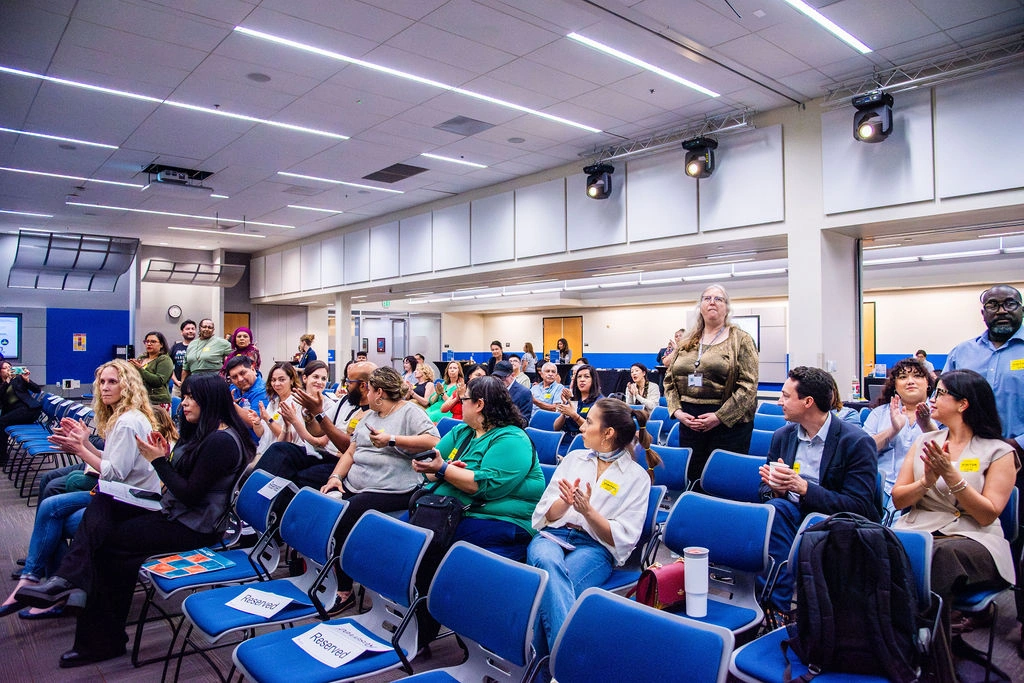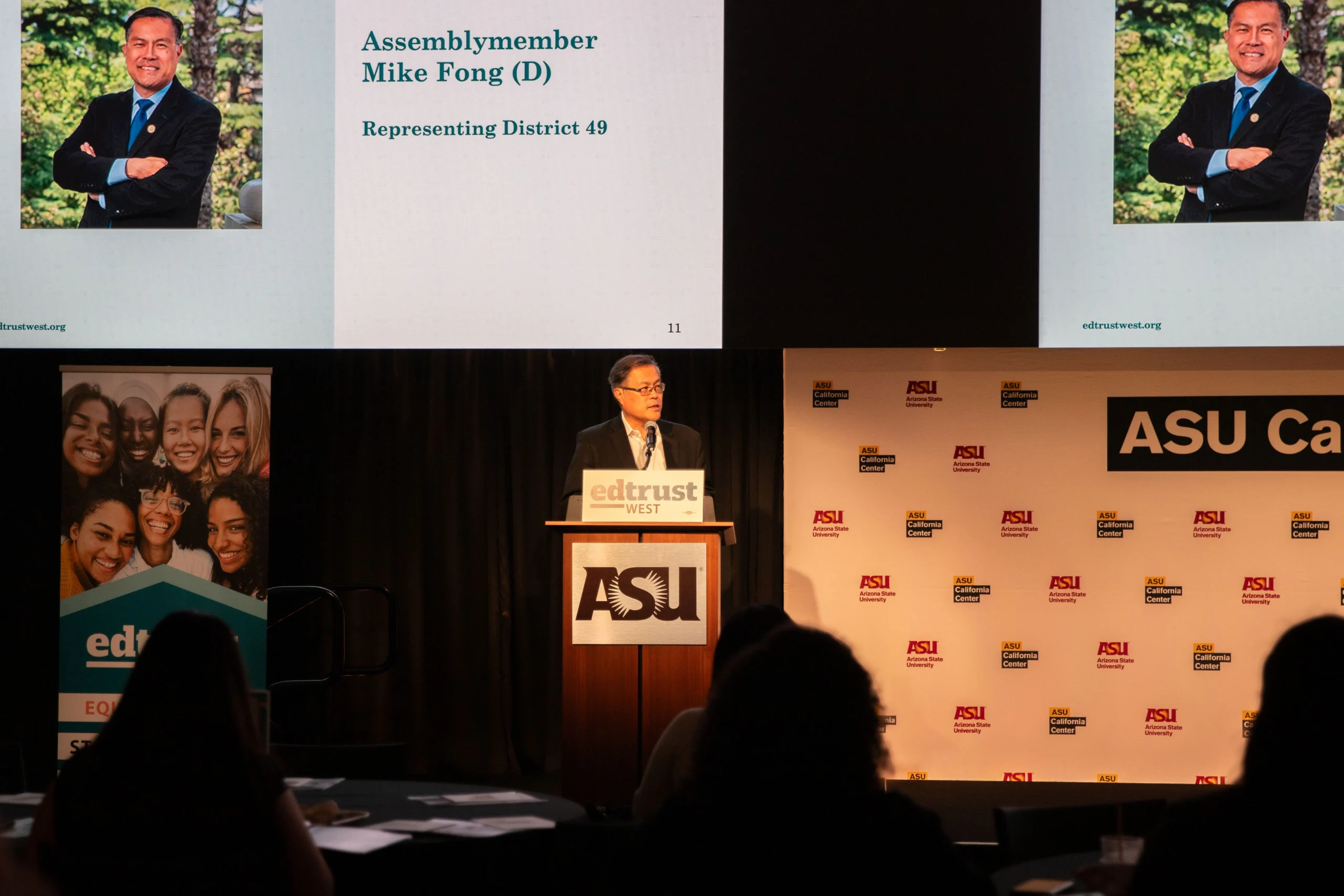
Advocacy means people showing up, organizing, and pushing systems and leaders to be better. And it works.
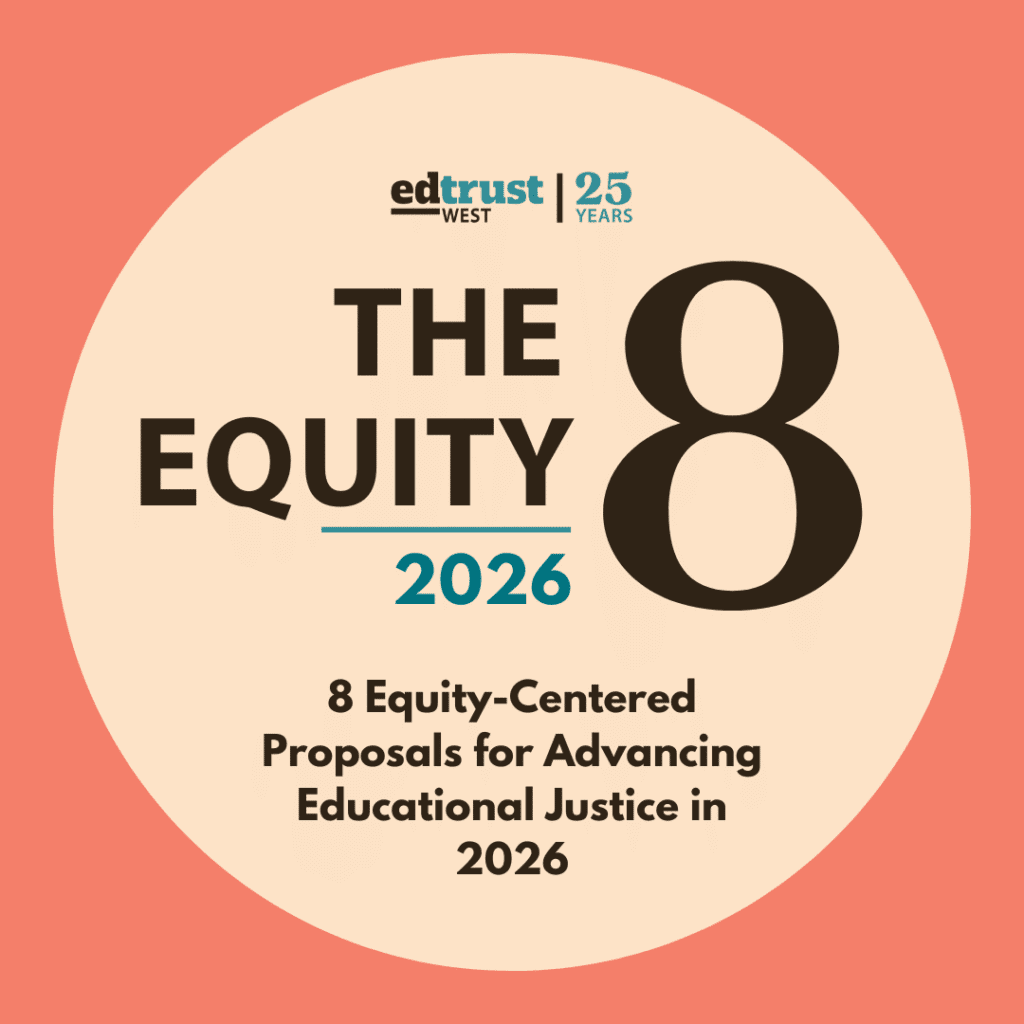
The 2026 Equity 8 highlights eight bills and proposals that can advance equity across California’s education pipeline right now, from early learning and K-12 to college and the systems that should and can connect them. These eight priorities focus on expanding opportunity, removing barriers, strengthening accountability, and ensuring students and families are supported at every stage. These ideas represent decades of collaboration while marking exactly where our advocacy has succeeded and where we must act next.
The Equity 8 for 2026
Last Updated: August 8, 2026

1) Expanding Dual Enrollment
What’s the problem
Dual enrollment allows high school students to earn college credit before they graduate, saving time and money and improving college outcomes. Yet access is deeply unequal. Black and Latinx students are more likely to attend schools that offer few or no dual enrollment opportunities, even though research shows these programs are especially powerful for students who have been historically underrepresented in higher education.
What this proposal would do
Governor Newsom’s proposed $100 million investment would expand College and Career Access Pathways (CCAP) programs. CCAP is the dual enrollment model explicitly designed to prioritize students from low-income backgrounds and students of color. Research confirms that CCAP partnerships are the most effective approach for closing opportunity gaps.
Why it matters for equity
Expanding CCAP would help ensure dual enrollment is not limited by zip code and would bring college pathways directly to the students who benefit most.
Update
Our advocacy was successful: the state budget includes $100 million to grow dual enrollment opportunities statewide, the largest investment in dual enrollment in years! This windfall, secured through years of advocacy by EdTrust-West and our partners, will help more Black, Latinx, and Native American students earn college credit while still in high school, reducing the time and cost to obtain a degree. The budget also includes an additional $10 million for technical assistance and implementation support through the California Community College Chancellor’s Office.
Winning funding is only the first step — the next step is ensuring equitable implementation so that students who have historically had the least access to dual enrollment opportunities benefit most. For more on the importance of dual enrollment to equitable college access, read our Jumpstart report. For equitable dual enrollment implementation support, submit an inquiry to EdTrust-West’s Educator Engagement Team here.

2) Expanding and Sustaining Community Schools
What’s the problem
Students cannot thrive academically when their basic needs go unmet. Community schools address this reality by combining strong instruction with health services, mental health support, and deep family engagement.
California’s one-time investments have shown strong results, but without ongoing funding, progress is at risk.
What this proposal would do
Since 2021, California has invested $4.1 billion in community schools, leading to improved attendance, academic outcomes, and school climate. Governor Newsom’s proposal for $1 billion in ongoing funding would sustain existing community schools and allow more schools to adopt this proven model.
Why it matters for equity
Community schools deliver the strongest gains for Black students, English learners, and students from low-income families. Sustained investment moves California closer to a vision where every school can function as a community hub.
Update
Our budget advocacy successfully helped secure $1 billion annually for community schools, a historic investment that ensures students and families across California have continued access to the integrated services, supports, and opportunities they need to thrive. This victory builds on years of advocacy to move community schools from a promising one-time initiative to a transformative, permanent statewide strategy that will grow over time to sustainably advance educational equity. Additional one-time funding will also help new community schools plan for and transition to a community schools model.
Securing permanent funding is a major milestone, but the work is not done. Now is the critical moment to ensure these investments are implemented equitably so that students and communities with the greatest need benefit most. Read more about how community schools advance education equity for Black students in our Black Minds Matter report. Ready to launch or grow a community school? EdTrust-West’s Educator Engagement Team provides support through systemic equity reviews, equity action planning, and implementation coaching. Submit an inquiry to EdTrust-West’s Educator Engagement Team here.

3) Continuing to Ease the Financial Burden of Teacher Prep Programs
What’s the problem
The cost of becoming a teacher remains a major barrier for many aspiring educators, particularly candidates from low-income backgrounds. This challenge undermines efforts to diversify the educator workforce and address California’s ongoing teacher shortage.
What this proposal would do
The Golden State Teacher Grant provides up to $10,000 to students completing teacher preparation programs who commit to working in high-need public schools. More than 28,000 future teachers have benefited from this program. Without legislative action, it will sunset in 2026. Advocates are calling for a $100 million investment to renew the program.
Why it matters for equity
Sustaining the Golden State Teacher Grant is essential to recruiting and retaining a diverse, well prepared educator workforce in California’s highest need classrooms.
Update
We successfully saved the Golden State Teacher Grant, securing $28M in the state budget to extend the program for two additional years. This win now creates a critical window for ongoing advocacy for the program to become a permanent state investment. The state budget also delivered major wins for California’s educator workforce, providing more than $650 million in teacher recruitment and preparation initiatives, including continued support for proven strategies such as teacher residencies and investments in promising new initiatives like Student Teacher Stipends and the Pathways to Bilingual Teaching Program, and expanded professional development to support universal transitional kindergarten. Together, these wins will help strengthen and diversify California’s educator pipeline, ensuring more students in California’s highest-need schools have access to well-prepared teachers. While these investments are significant, now is the moment to turn these two-year investments into permanent solutions that can meet California’s long-term educator workforce needs.

4) Clear State-Level Education Leadership
What’s the problem
California educates more students than any other state, yet its education governance structure is fragmented across multiple offices with overlapping authority. This lack of clear leadership slows implementation and weakens accountability for student outcomes.
What this proposal would do
Governor Newsom has proposed a budget reform to create a governor-appointed Education Commissioner with administrative oversight of the California Department of Education. This would improve coordination across agencies and clarify responsibility for statewide results.
Why it matters for equity
Strong leadership and clear accountability are essential for turning proven policies into real improvements for students, families, and educators across California.
Update
Following sustained advocacy from EdTrust-West and partners, Governor Newsom’s Education Governance Reform was successfully enacted, marking a major step toward a more accountable and effective education system. In less than six months, a governor-appointed, Senate-confirmed Education Commissioner will lead the California Department of Education to align leadership, accountability, and implementation. This long-overdue reform represents a bold step to fix a system that has too often put bureaucracy ahead of student outcomes.
While passing the policy was a major win, the next six months are critical to ensuring this new leadership structure delivers real results for students of color, multilingual learners, and low-income students. Read about other steps the state can take to streamline its leadership and ensure that equity solutions can be fast-tracked in this report from PACE.

5) Closing Gaps in the State’s Data Infrastructure
What’s the problem
California has made progress on education data, but gaps remain, especially in early childhood and workforce information. These gaps limit the state’s ability to evaluate programs, coordinate supports, and protect access to essential benefits for students and families.
What this proposal would do
Two bills address these challenges. AB 2092 by Assemblymember Bonta would strengthen how early childhood data is connected across systems. SB 1054 by Senator Cabaldon would improve the use of employment data to help eligible Californians maintain access to food and healthcare.
Why it matters for equity
Better data would help California make smarter decisions, reduce unnecessary harm, and design policies that better reflect real student pathways.
Update
After months of advocacy from EdTrust-West and our partners, SB 1054 continues to gain momentum earning unanimous Senate approval and advancing through the Legislature with strong bipartisan support. The bill is currently under review by the Assembly Appropriations Committee, and, if approved by August 14th, it will face an Assembly Floor vote and reach the Governor’s desk by August 31st. There’s still time to get this measure to the finish line: submit a support letter through the California Legislature’s Portal.
AB 2092 was held in the Assembly Appropriations Committee and will not move forward this year. EdTrust-West remains committed to working with state leaders to ensure early childhood data is connected across systems. Learn more about the Data for the People campaign and how our advocacy for statewide data drives equity.

6) Removing Public Education from California’s Ban on Affirmative Action
What’s the problem
Since 1996, Proposition 209 has limited California’s ability to directly address racial inequities in public education. Even as disparities persist, educators and policymakers have been constrained to race-neutral approaches that have repeatedly fallen short.
What this proposal would do
ACA 7 by Assemblymember Jackson would remove public education, with the exception of college admissions, from Proposition 209. If approved by voters, it would give state and local leaders the flexibility they need to use targeted, evidence-based strategies to close opportunity gaps.
Why it matters for equity
This change would allow California to address inequities more honestly and effectively while remaining grounded in data, research, and constitutional protections.
Update
ACA 7 has advanced through several Senate committees on narrow, party line votes and is now being considered by the Senate Appropriations Committee, demonstrating growing support for restoring California’s ability to address persistent racial inequities in education. At a time when students’ opportunities and outcomes continue to be shaped by race, ACA 7 would help remove barriers that limit the state’s ability to design policies and investments that directly address those disparities. If it clears that committee by August 14th, it will advance to a full Senate vote by the end of August. Because passing a constitutional amendment requires a two thirds majority vote and affirmative action remains a highly debated issue, ACA 7 faces significant challenges. This is precisely why continued advocacy is so important. Sustained public pressure and coalition support is crucial to ensure that ACA 7 reaches voters on the 2028 ballot.
To take action:
- Sign onto our coalition letter in support or email your state legislator by August 13th.
- Read our latest opinion piece in Capitol Weekly to learn how legal barriers currently limit targeted support for students and why passing ACA 7 is essential for educational equity.

7) Helping Students Living in Poverty Afford Basic Needs
What’s the problem
For many students, the greatest barriers to higher education are not tuition but food, housing, and transportation. The Cal Grant B Access Award has not kept pace with rising living costs, leaving students struggling to meet basic needs while enrolled.
What this proposal would do
SB 1006 by Senator Padilla would update the Cal Grant B Access Award so it increases over time and better reflects real student expenses. The bill would also expand additional support for student parents.
Why it matters for equity
Aligning financial aid with reality would help students remain enrolled, reduce hardship, and make college a viable path rather than a constant financial crisis.
Update
While SB 1006 was held in the Senate Appropriations Committee due to fiscal concerns, our advocacy helped elevate the urgent need for financial aid reform and brought renewed attention to the barriers many California students face in accessing and affording college.
The need for a stronger, more equitable financial aid system remains, and EdTrust-West will continue working with state leaders and partners to advance creative solutions to California’s college affordability crisis. Read more of our Cal Grant reform recommendations in this Equity Alert, co-authored by our partner The Institute for College Access and Success, and get involved in our #AllIn4FinancialAid work.

8) Reforming California’s English Learner Reclassification
What’s the problem
California’s English learner reclassification process has barely changed in decades. Many students remain identified as English learners longer than necessary, restricting access to advanced coursework and long-term academic opportunities.
What this proposal would do
AB 2555 by Assemblymember Patel would modernize the reclassification process by prioritizing the state English proficiency assessment, automating decisions when appropriate, strengthening data tracking, and improving communication with families.
Why it matters for equity
Timely reclassification helps students access the full curriculum and ensures families are partners as students work toward bilingualism and academic success.
Update
This proposal passed the Assembly unanimously, demonstrating strong bipartisan support and significant momentum generated through sustained advocacy. This is an encouraging sign that it may be highly popular in the Senate as well. It is currently under review by the Senate Appropriations Committee. If it clears that committee by August 14th, it will move to a Senate Floor vote to reach the governor’s desk by August 31st.
With the measure now within reach of final passage, continued support will be critical. To voice your support to lawmakers, submit a support letter through the California Legislature’s Portal.