Why Math Matters in California Education
Too many students are denied access to high-quality math and the opportunities it unlocks. It’s time to transform our education systems so that every California student can succeed. This page breaks down the systemic barriers in California’s math pathways and explores the data-driven solutions EdTrust-West is championing to build an equitable framework for all students.
Why Math Matters
Math isn’t just a subject; it shapes who has access to opportunity. In California, math is often the gateway to college, careers, and economic mobility. Yet for too many California students, it acts as a barrier instead of a pathway.
Students of color and multilingual learners are too often denied access to rigorous instruction and support that lead to success. These gaps don’t reflect differences in ability; they reflect real differences in opportunity.
And when students are put off track, it becomes harder to catch up. Barriers in math today can close doors tomorrow.
Our Math Matters initiative is about changing that. We’re working to ensure every student, no matter their background, has access to high-quality, affirming math learning that keeps doors open.
By the Numbers
In California, disparities in instructional quality, course placement, and ongoing support compound from early grades through college. This isn’t a reflection of student potential; it’s the predictable result of systemic barriers. The data below reveals the compounding impact of these structural failures:



Latest Resource
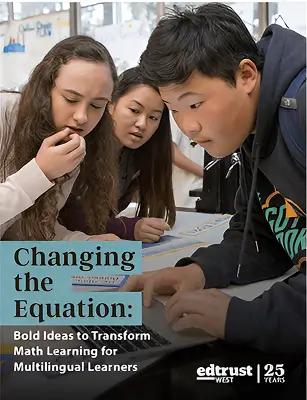
To build a future where all California students succeed, we must bridge the math gap for our nearly one million English learners. Currently, only 1 in 9 English learners reach grade-level standards in math—a challenge that requires urgent, systemic change.
Changing the Equation: Bold Ideas to Transform Math Learning for Multilingual Learners examines why these inequities persist and what the state must do to address them
What Needs to Change
At EdTrust-West, we believe math should open doors, not shut them. If California is serious about expanding opportunity, we must move from isolated fixes to a coherent education system that is designed for access and success. That means:
Start Early
Help young students (TK-3rd grade) build strong math foundations and confidence from the very beginning.
Ensure access to high-quality teaching
Every classroom should have high-quality materials and well-supported educators.
Keep students on track in middle school
Make sure all students get the support they need to build key skills and stay ready for algebra and beyond.
Support multilingual learners
Provide instruction that values and builds on students’ languages and strengths, not treat them as barriers. Expand access to programs like dual-language learning.
Invest in teachers
Recruit diverse educators and provide sustained training, collaboration, and resources, so they can deliver strong, inclusive math instruction.
Make systems work together
Connect TK-12 and higher education, so students don’t lose momentum.
Strengthen the path to college and careers
Better connect high school and college so students can move smoothly into college-level, career-relevant math.
Use data for accountability
Track access, and not just outcomes, and act on what is found.
Open doors in high school
Default students into rigorous courses and provide extra help so they can succeed.
Principles for High Quality and Equitable Math Education
Achieving high-quality demands bold, systemic change. EdTrust-West’s math advocacy is grounded in three core principles:

1

2

3
Take Action
Transforming math education in California is a collective effort, and everyone has a role to play:




Past Resources
The California High-Quality Instructional Materials (HQIM) Learning Community is a statewide coalition of educators, advocates, and practitioners working to transform math education by advancing high-quality, equitable, and culturally responsive…


This EdTrust-West report, From Policies to Practice: Paving the Path to College Readiness for Students of Color in LAUSD, examines the district’s college readiness efforts, with a focus on policies such as A–G curriculum requirements.
This essential guide from the HQIM-LPC, Defining High-Quality Instructional Materials for Mathematics: Centering the Assets and Needs of Multilingual Learner and English Learner Students, offers a framework for inclusive and…
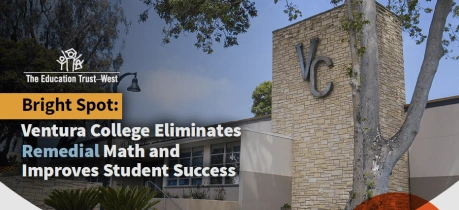
For too long, remedial courses in California Community Colleges created costly barriers that hindered student success. Assembly Bill 705, signed into law in 2017, seeks to remove these barriers by requiring colleges to eliminate…
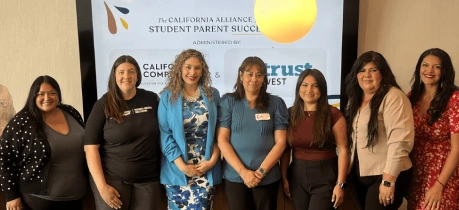
Bring our team’s expertise to your institution, district, or campus. We offer tailored support that helps leaders make data-informed decisions, strengthen educator…

2019
Three out of four California students… are students of color, but just one third of their teachers are people of color.
2018
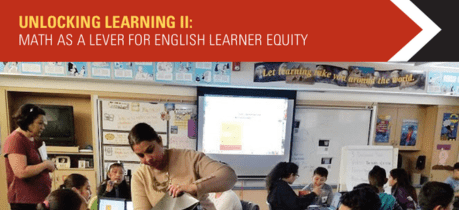
We must do more to ensure that English learners have equitable access to rigorous math learning opportunities and are supported to achieve at high levels.

2015
Providing a path to math proficiency for all students is both a critical equity issue, and an economic imperative…

2015
While STEM learning opportunities are abundant in some schools and districts, they are not available to far too many of our students.
Join the Movement
Join our Instructional Materials Learning Partners Coalition mailing list and learn more about our work.