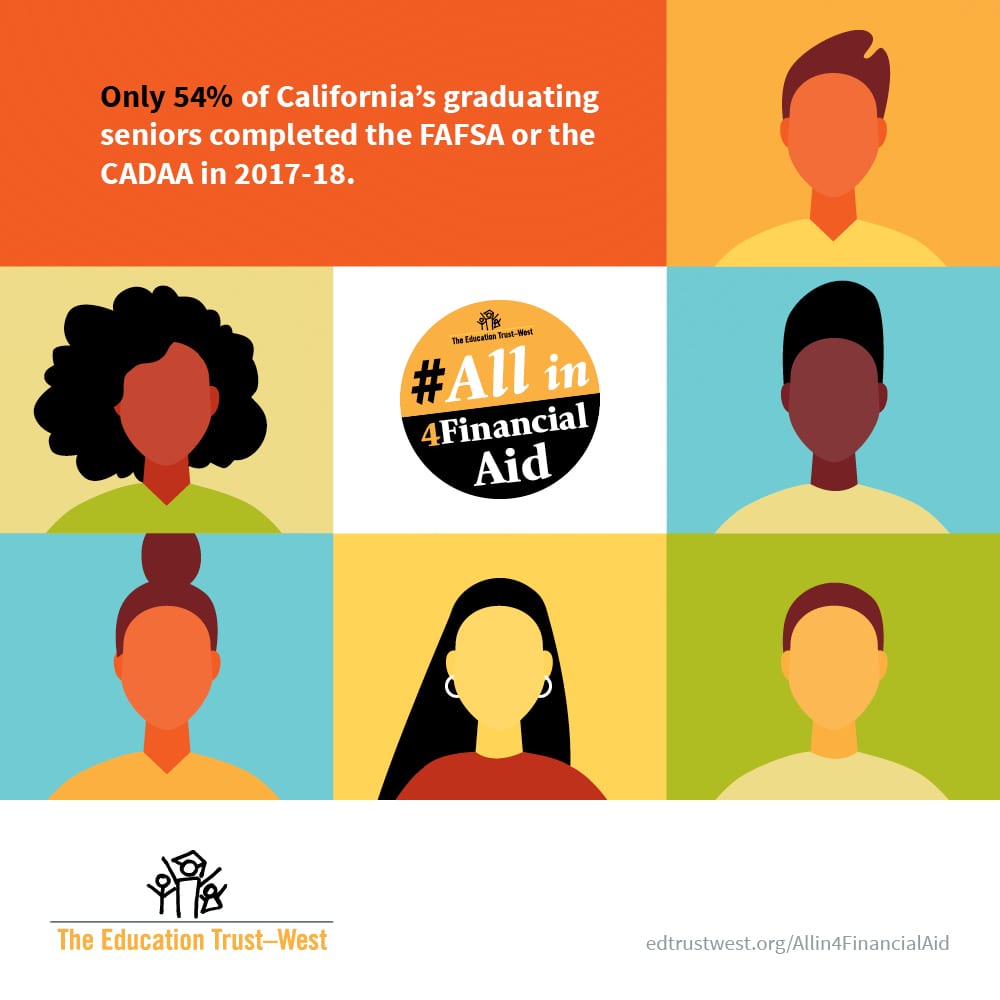
One of the largest barriers to attaining a degree is college affordability – but it doesn’t have to be. California educates approximately 1 out of every 10 K-12 students in the nation. Alarmingly, thousands of eligible low-income students and students of color attend high schools with some of the lowest financial aid application rates in the state.
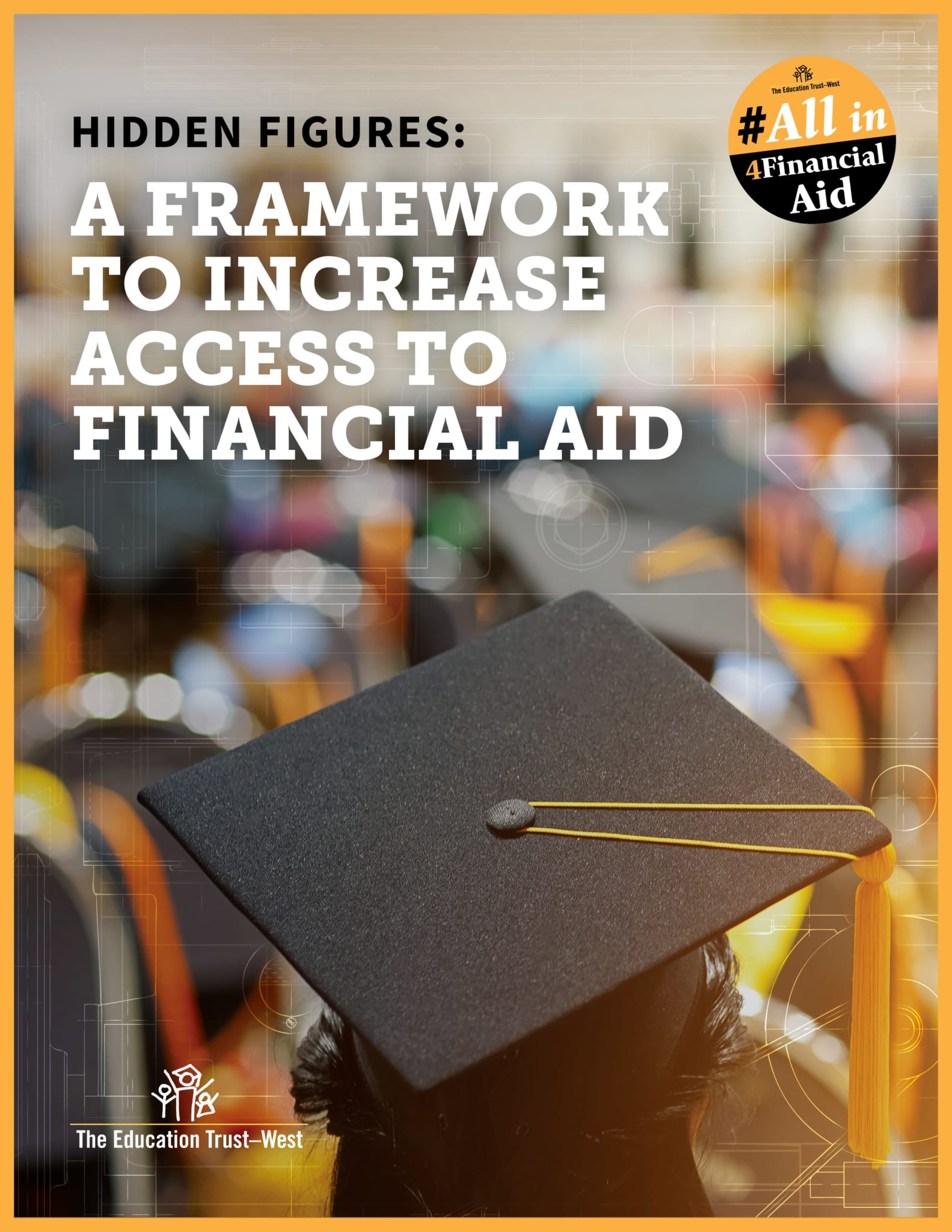
Hidden Figures: A Framework to Increase Access to Financial Aid identifies five “components of success” – insights from diverse, cutting-edge districts and schools about best practices and strategies that are helping to close equity gaps. These components of success include:
- Prioritizing Completion Through Policy
- Collecting & Monitoring Appropriate Data
- Establishing & Maintaining Strong Partnerships
- Building Relationships & Trust
- Programming with Students at the Center
Educators, from superintendents to counselors, and teachers, in many schools and districts across the state are already engaging in a variety of practices to help improve financial aid awareness and completion. Take a look at our Hidden Figures brief and accompanying toolkit to explore these success strategies.
Hidden Figures: A Framework to Increase Access to Financial Aid is part of the All in for Financial Aid campaign. Learn more about actions you can take to increase access to financial aid.